From an opaque tax process to a structured, predictable, decision oriented digital journey
I increased transparency and trust in tax recovery by transforming a technical and bureaucratic flow into a clear digital experience, with visible steps and objective evaluation criteria.
*Confidentiality Note
This project involves strategic and sensitive information. For contractual and ethical reasons, details were abstracted. Complete flows and final interfaces are not publicly displayed and are available only in service demonstration contexts.
Context and Challenge
Business Goals and Product Challenges
Tax credit recovery depends on technical rules, legal interpretation, and offers little visibility for most companies.
Even when taxes are paid incorrectly, many organizations do not know if they have eligible credit, the estimated value, or how long the process may take.
Before the project, the flow showed:
Excessively technical language
Manual and fragmented processes
Low predictability of steps, timelines, and outcomes
The challenge was to turn a complex tax legal service into a comprehensible digital experience, without compromising technical rigor, tax compliance, or legal certainty.
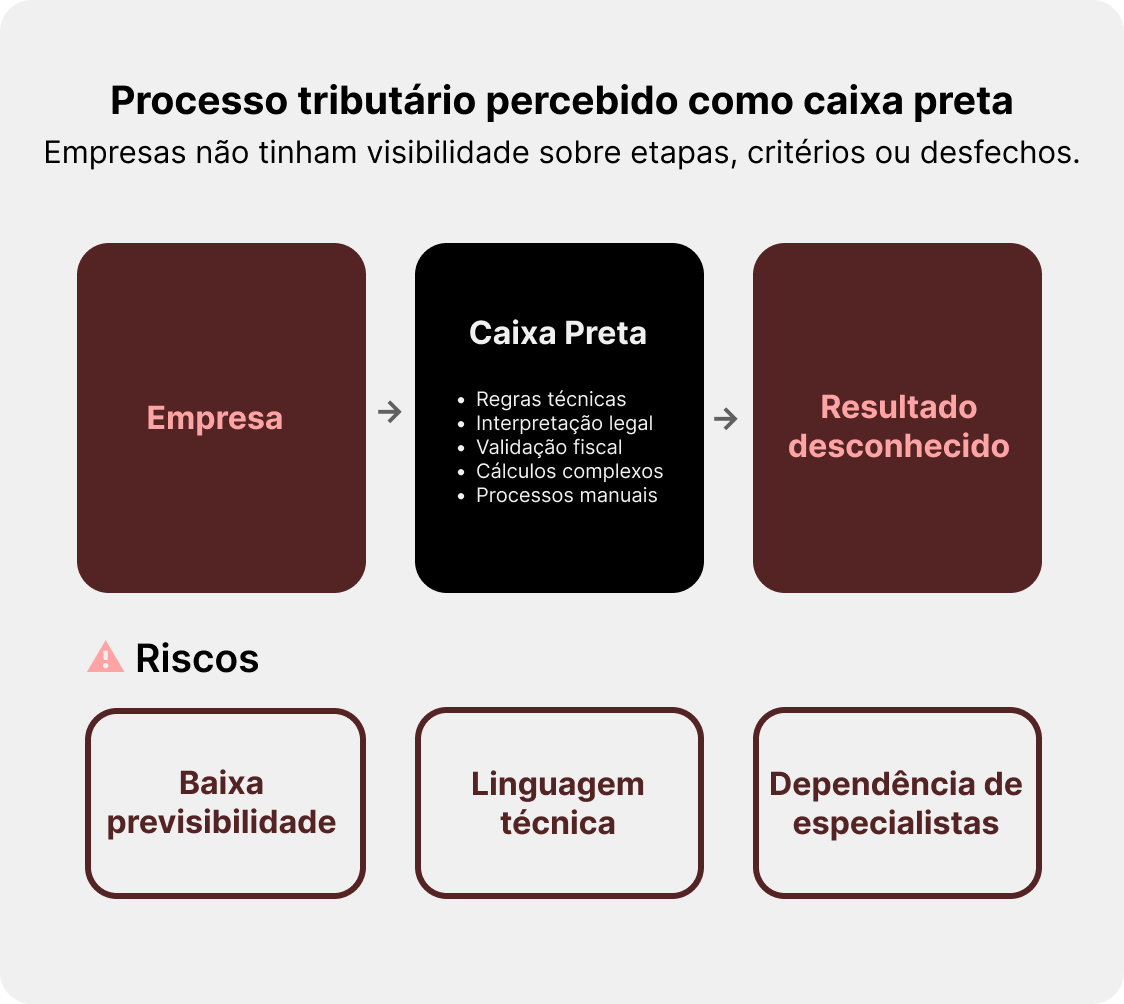
Tax Black Box
Key Insights
Discovery, Research, and Synthesis
User interviews and process analysis revealed a central issue:
“The concern was not the service cost, but entering a process that could not be understood or followed.”
Companies accepted the complexity of the subject, but needed:
Clarity on what was in progress
Visibility of progress
Trust in a technical, impartial, and secure analysis
Without these elements, abandonment happened before the analysis was completed.
Flow with friction points
Affinity Chart
Strategic Decision
Product Strategy and Solution Prioritization
The decision was not to reduce technical content, but to structure complexity into clear and progressive stages.
The product started to:
Guide users through a structured intake process
Define responsibilities between platform and client
Make analysis, validation, and calculation stages explicit
Communicate results objectively, even when no credit was available
The experience was designed to reduce anxiety and support decisions, not just optimize execution.
New flow
Execution & Design
Solution Execution and Experience Design
Execution organized a regulated and technical process into a progressive digital journey, focused on predictability and reduced cognitive effort.
The work included:
Guided structuring of user onboarding and tax data input
Translation of legal and tax stages into clear language
Creation of explicit states for progress, analysis, and results
Design focused on security, predictability, and trust
Attention to service scalability and regulatory constraints
Design acted as a layer to organize complexity, preparing the product for growth without exposing sensitive business logic.
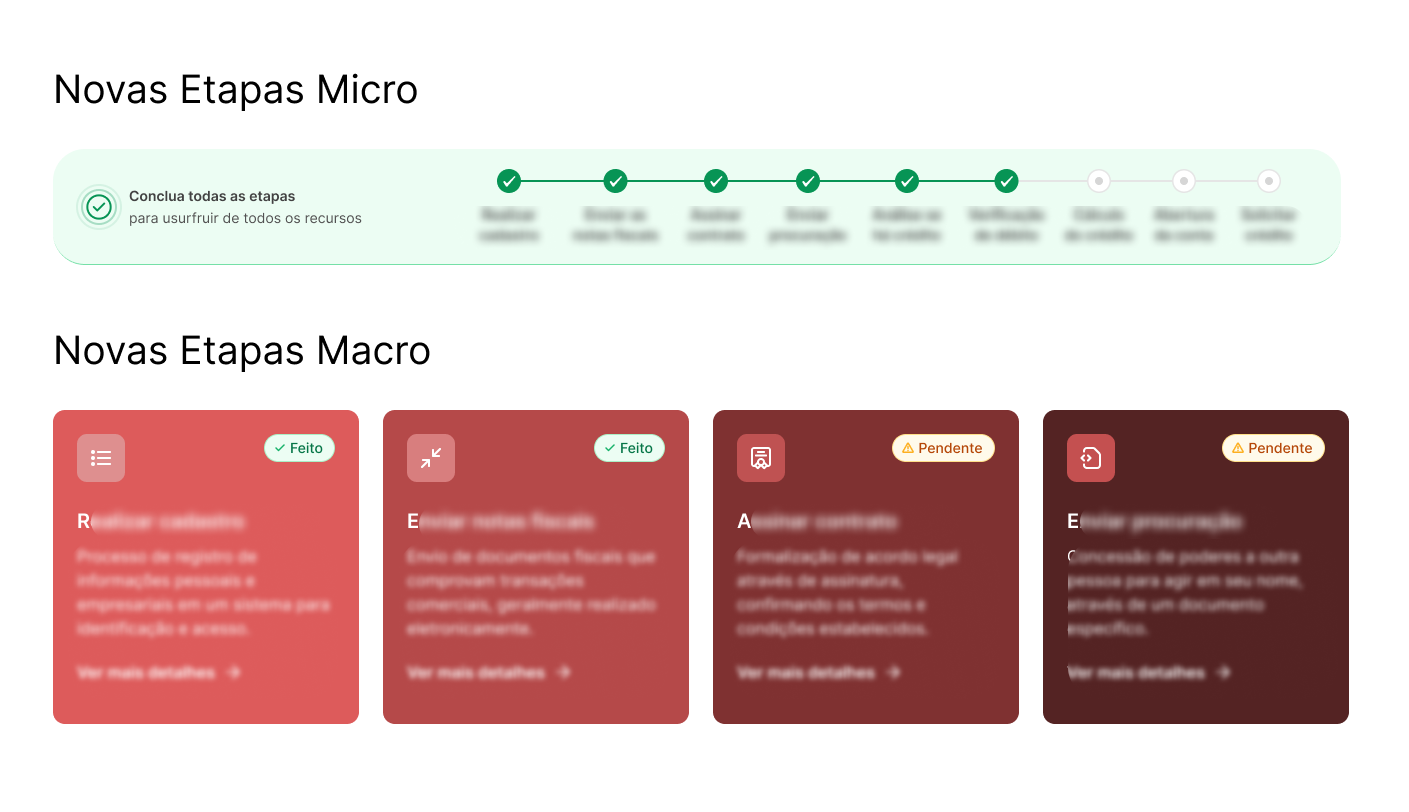
Initial steps and details of credit analysis
Availability of tax credit
User Validation
Data-Informed Iteration
Solutions were validated iteratively, assessing:
Understanding of process stages
Clarity of status and result messages
Trust in the interpretation of analyzed values
Reduction of questions throughout the journey
Validation showed that understanding the process carried the same weight as the final value in decision making.
Moderate usability testing
Strategic Reflection
Impact and Learnings
The experience began to organize complexity and sustain trust in a regulated tax service.
Earnings
Increased transparency in a tax process that was historically hard to access
Reduced uncertainty throughout the journey
Clear understanding of outcomes, including cases with no eligible credit
Solid foundation to scale a technical service with a consistent and trustworthy digital experience
The project reinforced a core insight:
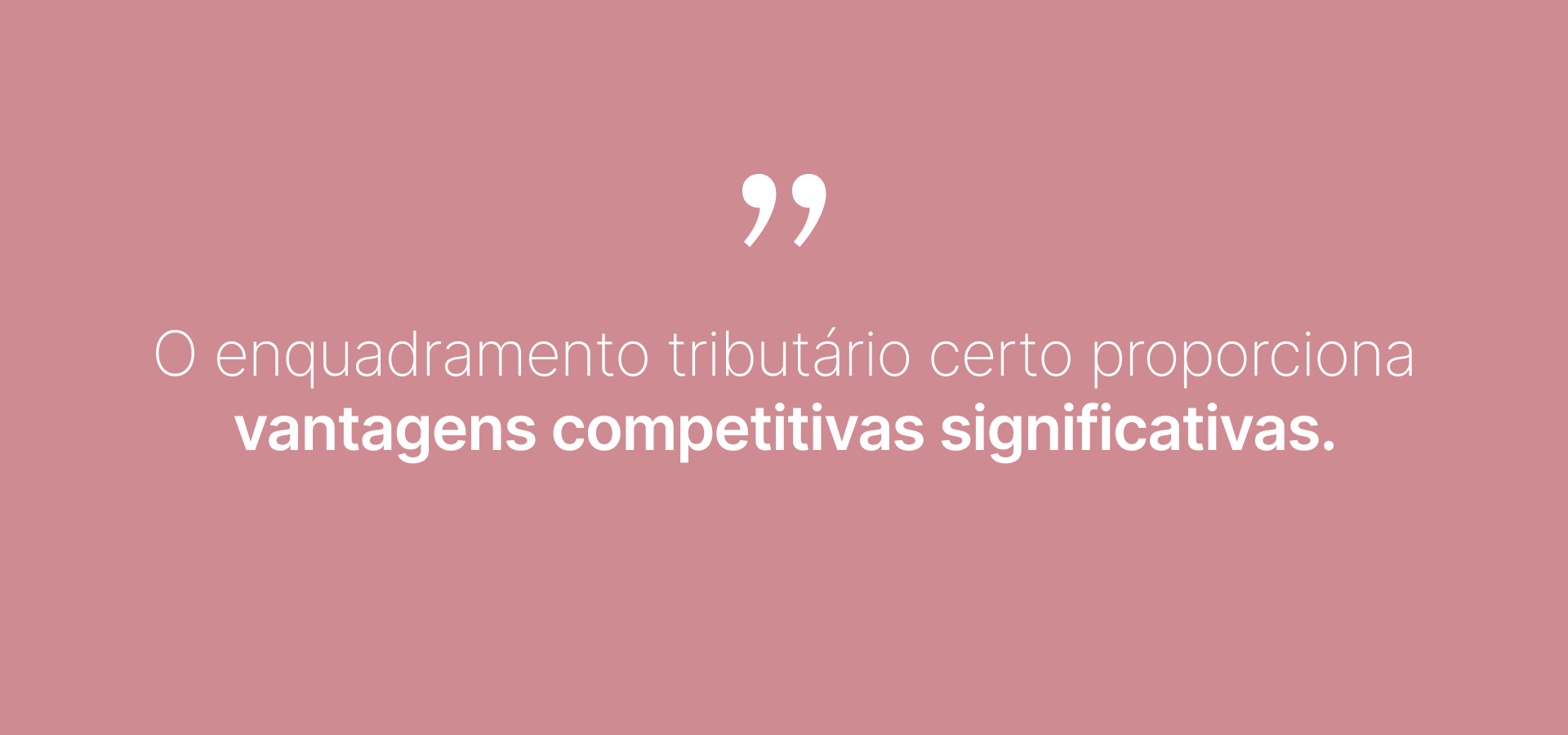
In regulated tax services, process predictability sustains trust and adoption.
By organizing stages, clarifying responsibilities, and communicating outcomes objectively, the product reduced uncertainty and enabled the scale of a technical service without compromising legal credibility.
This experience strengthened my work in B2B fintechs, using design as direct support for business decision making.


.png)
.png)