Structured Credit Origination and Screening Platform
Reducing operational friction in borrower and investor prospecting within capital markets
I increased origination efficiency by automating borrower and investor screening, turning a manual process into a digital funnel that prioritizes opportunities viable for the business.
*Confidentiality Note
This project involves strategic and sensitive information. For contractual and ethical reasons, the details presented here have been abstracted. Full flows and final interfaces cannot be publicly displayed and are available only in a service demonstration context.
Context and Challenge
Business Goals and Product Challenges
A structured credit fintech that connects borrowers and investors, integrating analysis, structuring, and issuance within the capital markets ecosystem.
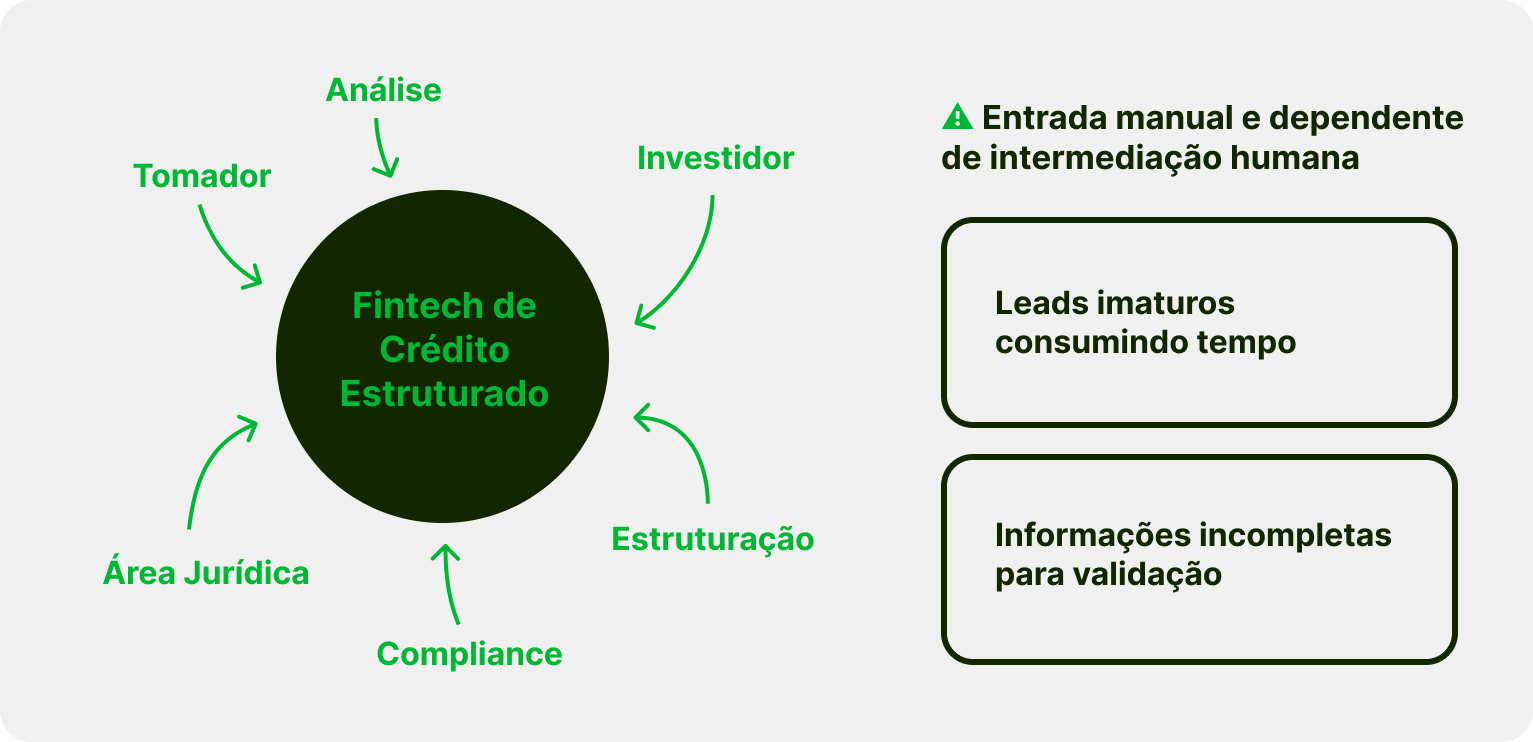
Before the project, new client entry was manual, fragmented, and dependent on human interaction from the start. This model created two critical issues:
High consumption of internal team time on early stage leads
Lack of standardization and depth in the information required to validate a structured operation
The challenge was not to increase lead volume, but to structure ecosystem entry, ensuring relevant data from the first contact without harming journey flow.
Ecossistema fragmentado
Key Insights
Discovery, Research, and Synthesis
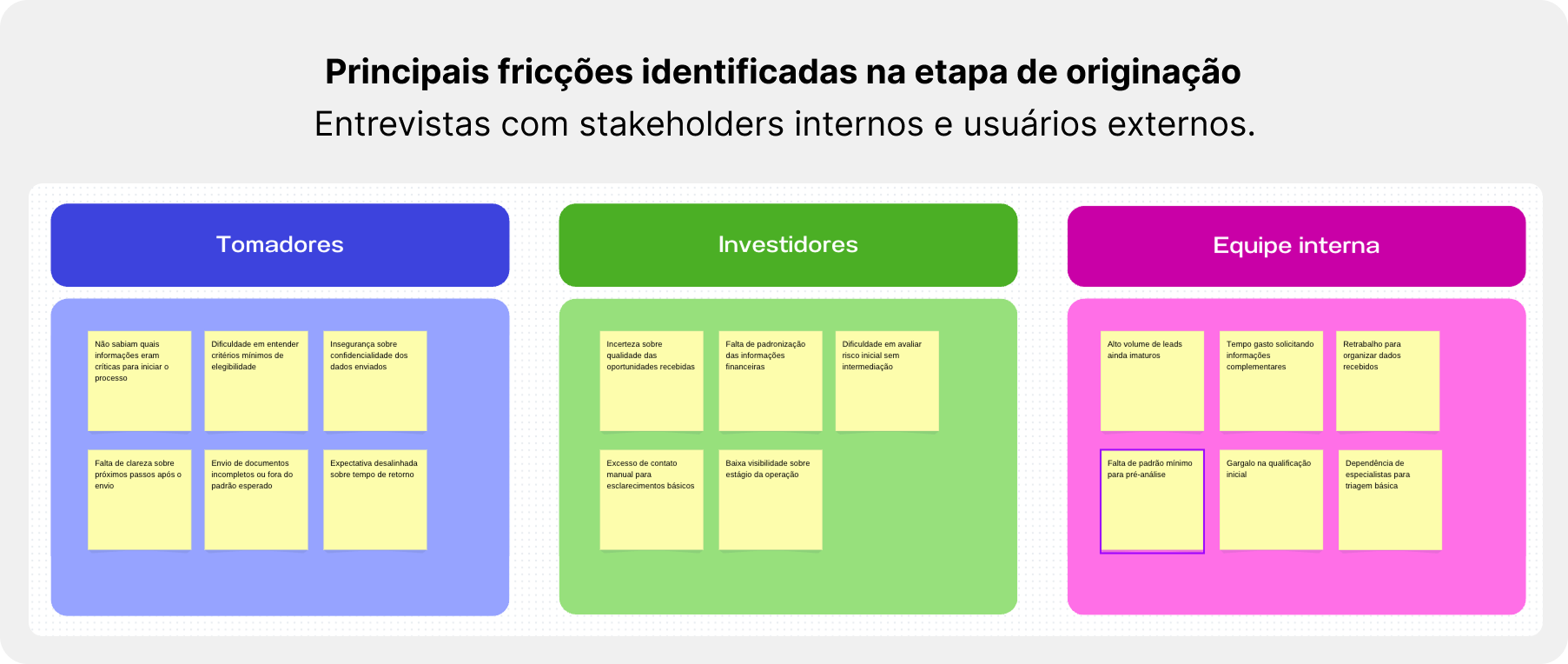
Interviews with internal stakeholders and external users revealed a central issue:
“The problem was not interest in raising capital, but difficulty understanding what was required to move forward safely.”
Borrowers and investors initiated contact but:
Did not know which information was critical
Submitted incomplete or non standard data
Depended on human mediation to progress
Internally, this caused rework, bottlenecks, and delays in validating opportunities with real structuring potential.
Friction map at the entrance
Affinity map
Strategic Decision
Product Strategy and Solution Prioritization
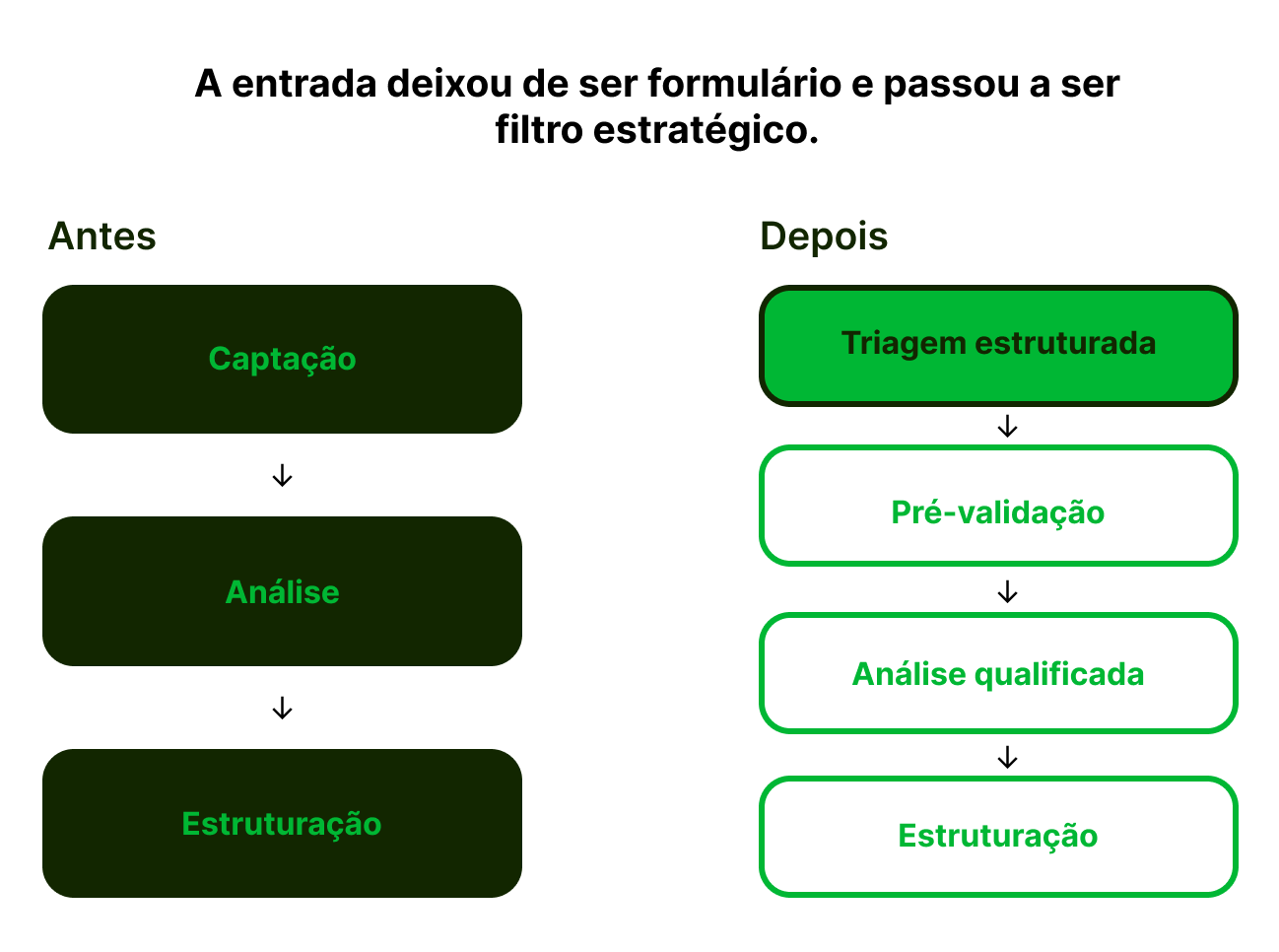
The decision was to treat entry as a structuring stage of the credit cycle, not as a simple lead capture form.
The focus became:
Enabling borrower and investor entry without artificial barriers
Collecting all mandatory information for future validation from the start
Preparing clients for structuring logic before formal approval
The portal was designed as a pre structuring layer, where data, expectations, and criteria were organized early, reducing friction in later stages of the cycle.
Entry as a structuring stage
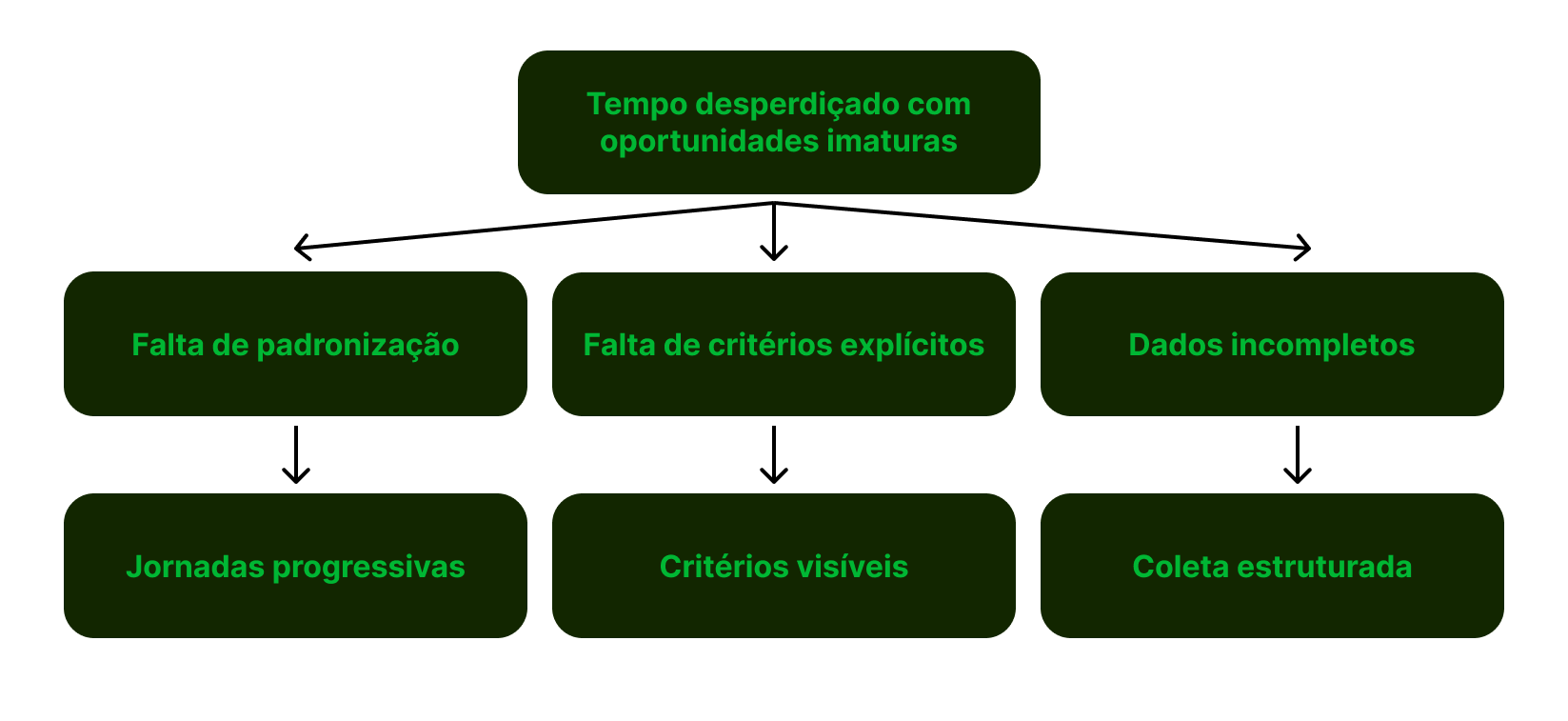
Opportunity Solution Tree
Execution & Design
Solution Execution and Experience Design
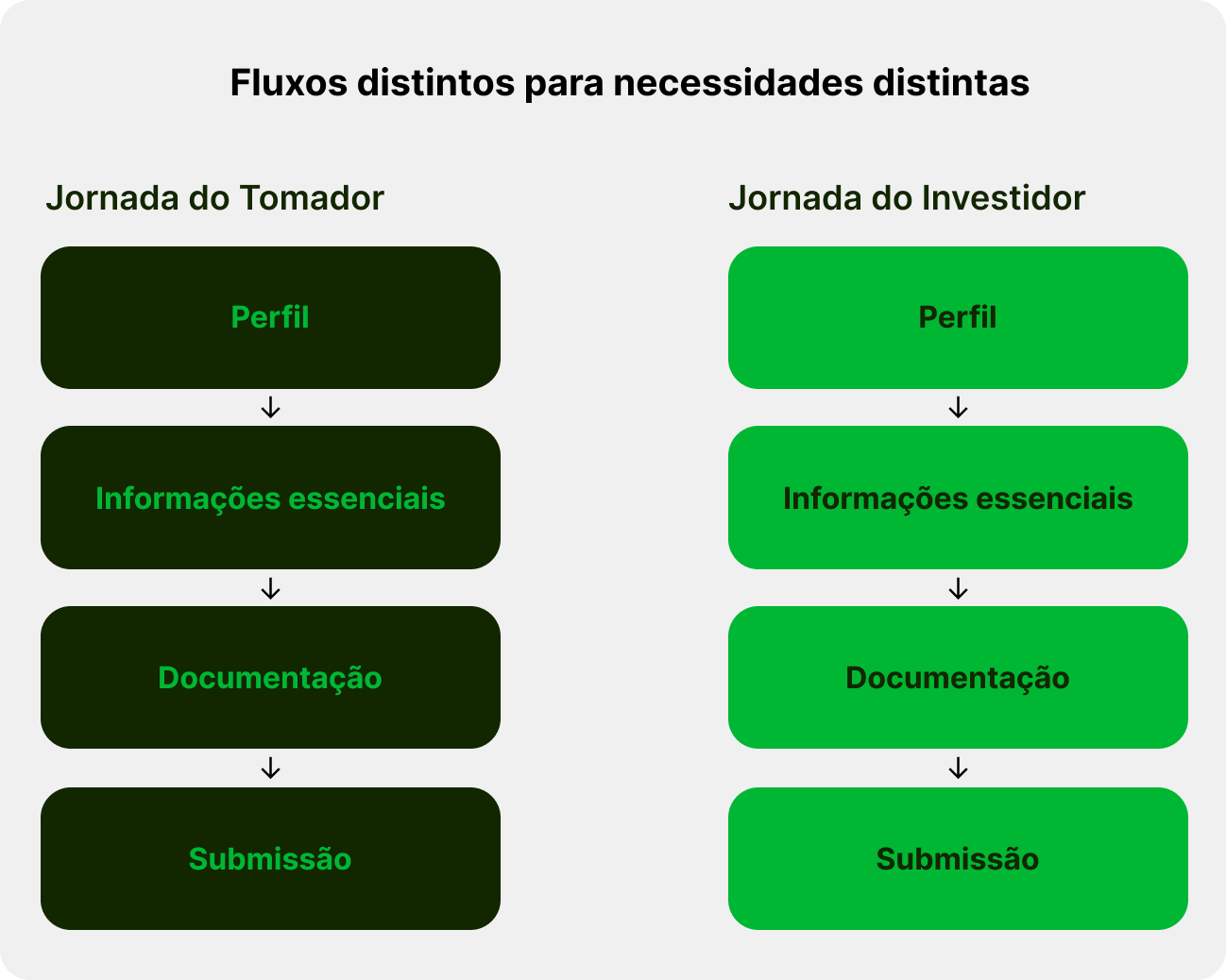
The solution took shape as a screening and prospecting portal, with distinct flows for borrowers and investors.
Key design decisions:
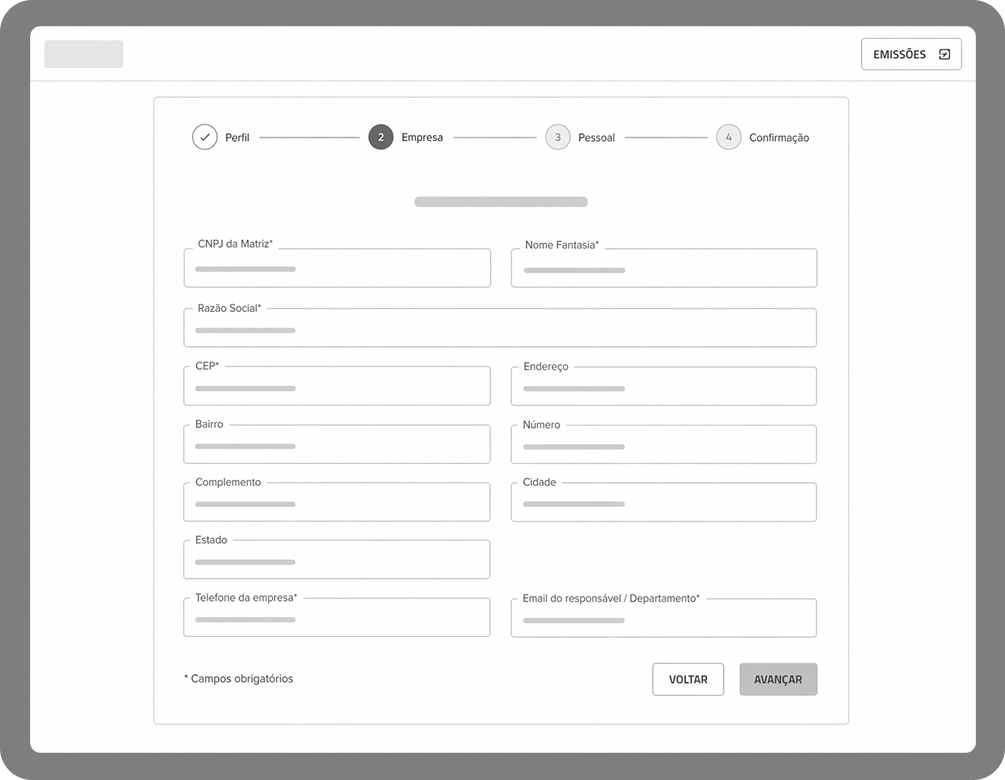
Progressive journeys guiding the delivery of essential information
Clear language to translate complex financial concepts
Modular structure prepared for continuous evolution
Consistent, scalable components for a regulated environment
All flows considered technical feasibility, business rules, and future integration with internal systems.
Two separate journeys
Progressive structure
Wireframe - Portal de pré-estruturação
Wireframe - Cadastro inicial
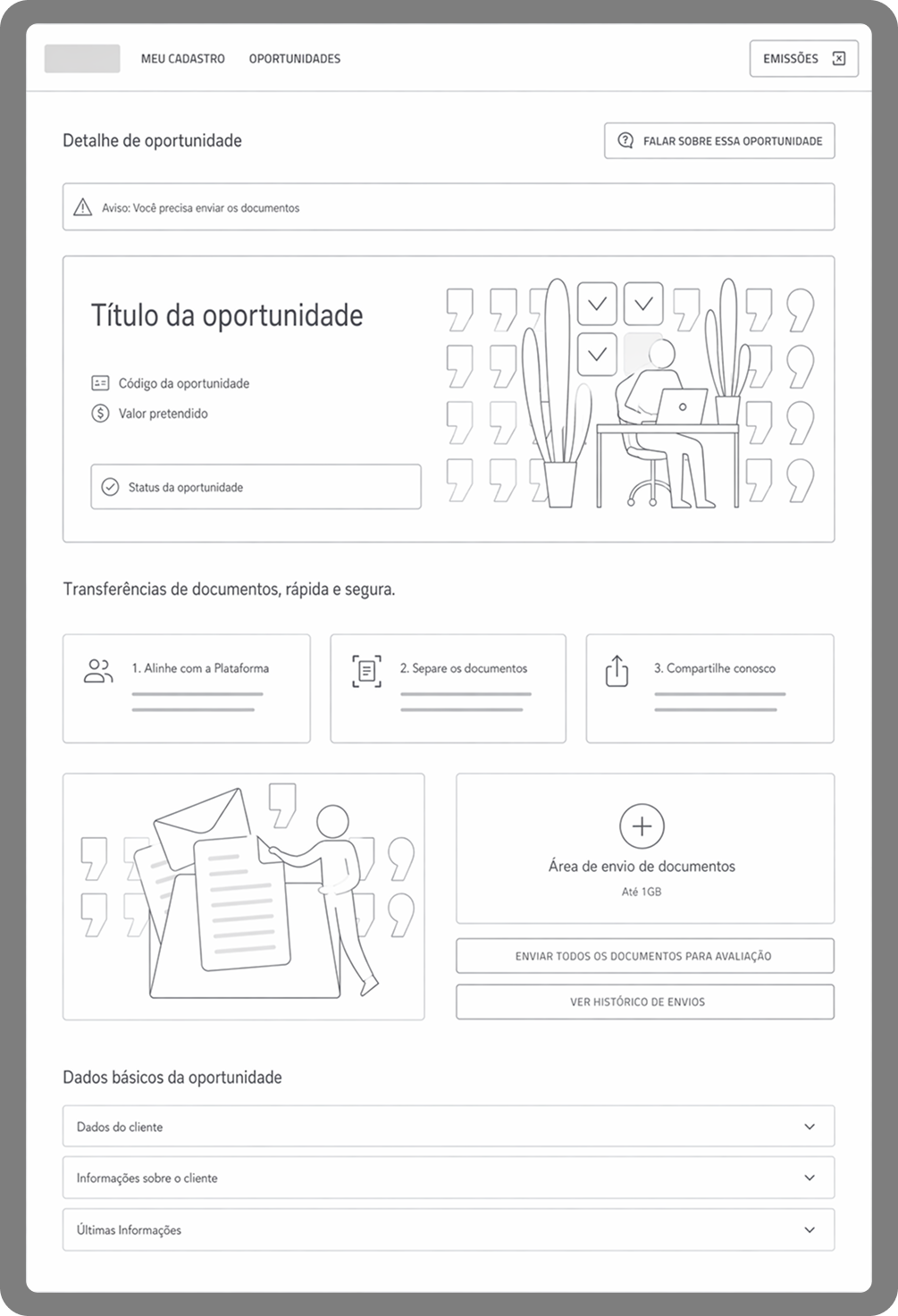
Wireframe - Gestão de Oportunidades
Tables, forms and their variants
User Validation
Data-Informed Iteration
Flows were validated with:
External users, assessing clarity and understanding
Internal stakeholders, validating the quality and usefulness of collected information
Testing showed higher user autonomy and more structured data for internal teams, reducing early mediation and operational noise.
Resultados do teste para refinamento
Strategic Reflection
Impact and Learnings
The product began operating with greater clarity and predictability from origination.
Earnings
Simpler entry for borrowers and investors in a regulated ecosystem
Automated collection of essential data for future validation
More efficient use of specialist team time
Clear, criteria driven experience from the first interaction
The project reinforced a core insight:
Origination quality defines efficiency, risk, and scale in structured credit.
By structuring borrower and investor entry, the product reduced operational friction and preserved specialist team capacity.
This work deepened my experience in regulated financial products, with a systemic view from the first point of contact.