OAB

Connecting professionals and opportunities in the legal market

I improved alignment between professionals and law firms by structuring a job platform with clear criteria, efficient filters, and distinct flows, bringing more transparency and efficiency to legal hiring.

Context and Challenge

Business Goals and Product Challenges

The OAB identified a structural gap in the legal market: the lack of a reliable, specialized digital environment to connect professionals with the right opportunities.

Lawyers, especially recent graduates, accepted roles misaligned with their specialization. Law firms struggled to find suitable profiles. The issue was not lack of opportunities, but information asymmetry, manual processes, and unclear job offerings.

The challenge was to structure this market, balancing the interests of two distinct audiences within a traditional and highly selective sector.

Key Insights

Discovery, Research, and Synthesis

Interviews with lawyers and OAB representatives revealed a central point:

"The main pain was not finding jobs, but trusting them."

Lack of clear criteria and standardized information created insecurity for both candidates and firms.

Strategic Decision

Product Strategy and Solution Prioritization

The decision was to position the platform as trust infrastructure, not as a job board.

This translated into:

  • Standardized opportunity information
  • Filters by practice area, seniority, and region
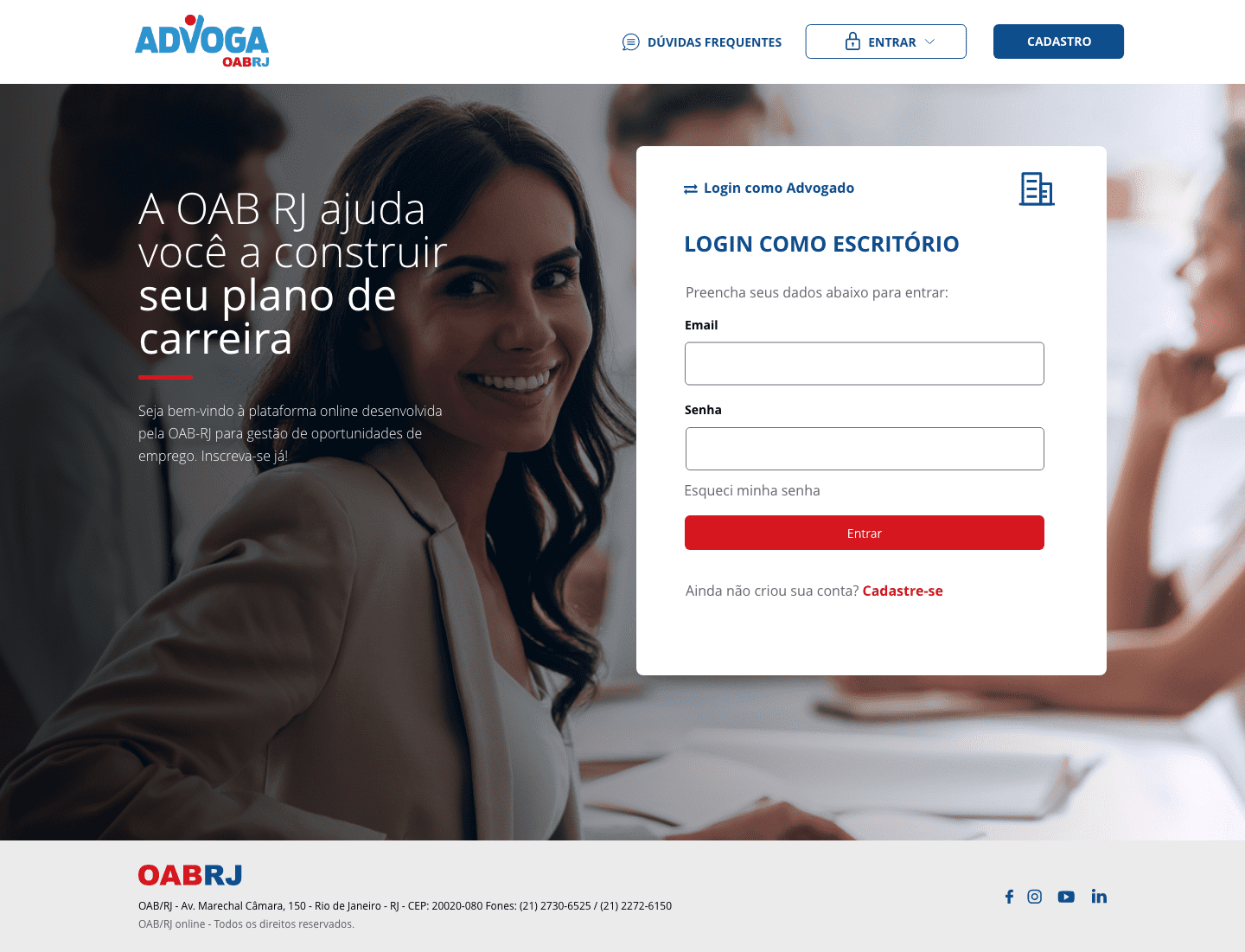
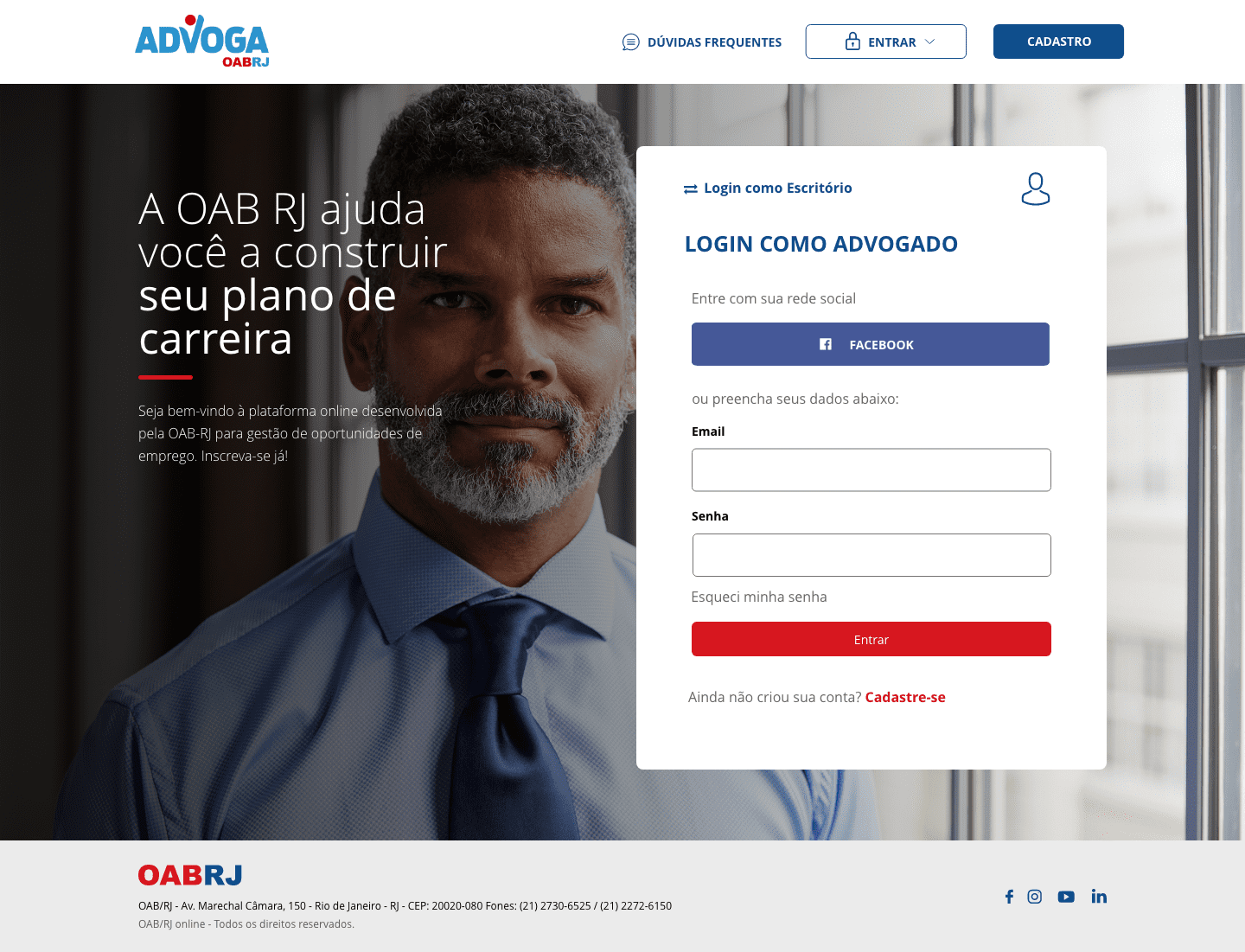
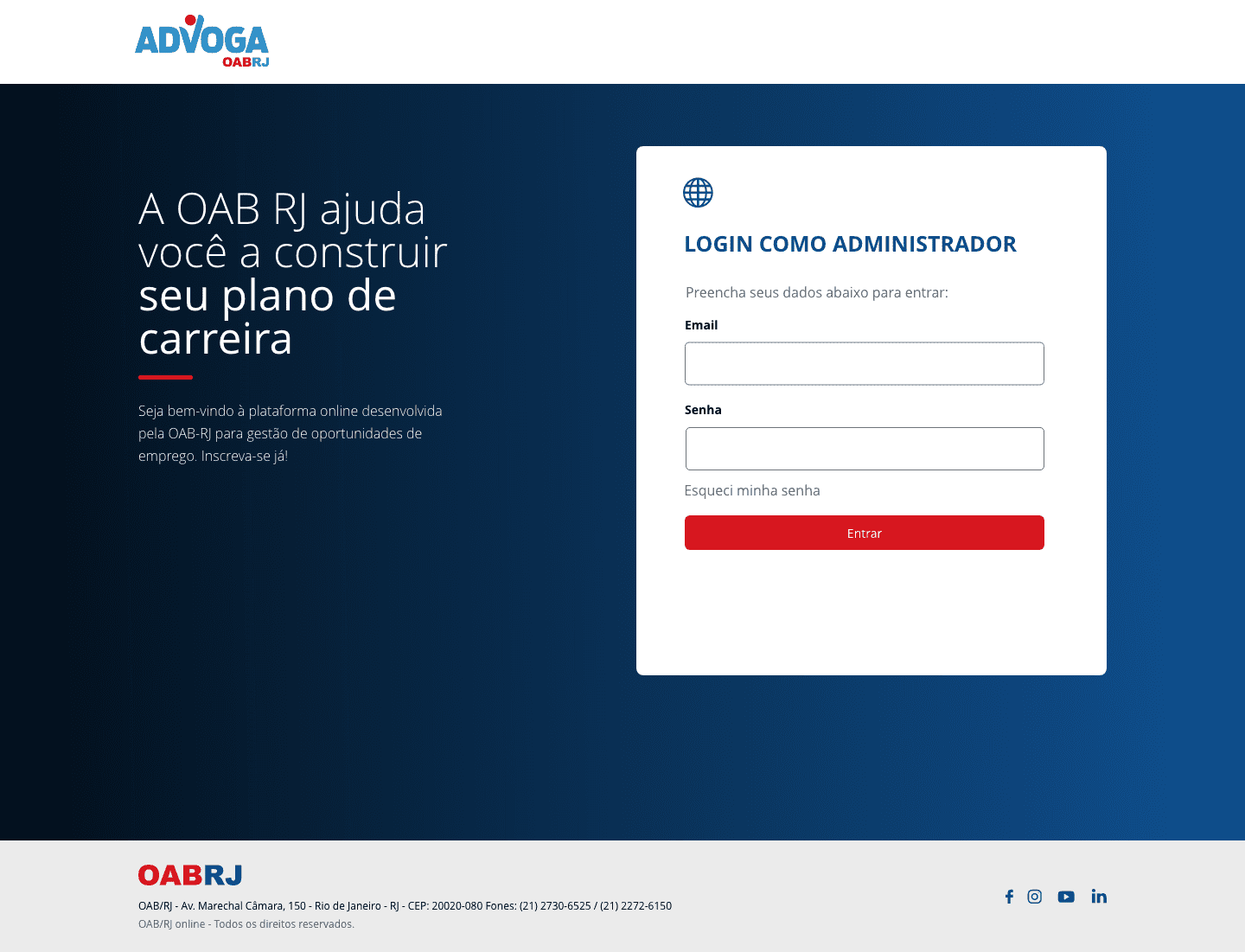
  • Distinct journeys for recruiters and candidates
  • Clear, accessible language without excessive jargon

Approaches focused only on job volume were discarded in favor of quality and alignment.

Execution & Design

Solution Execution and Experience Design

With the strategy defined, the work included:

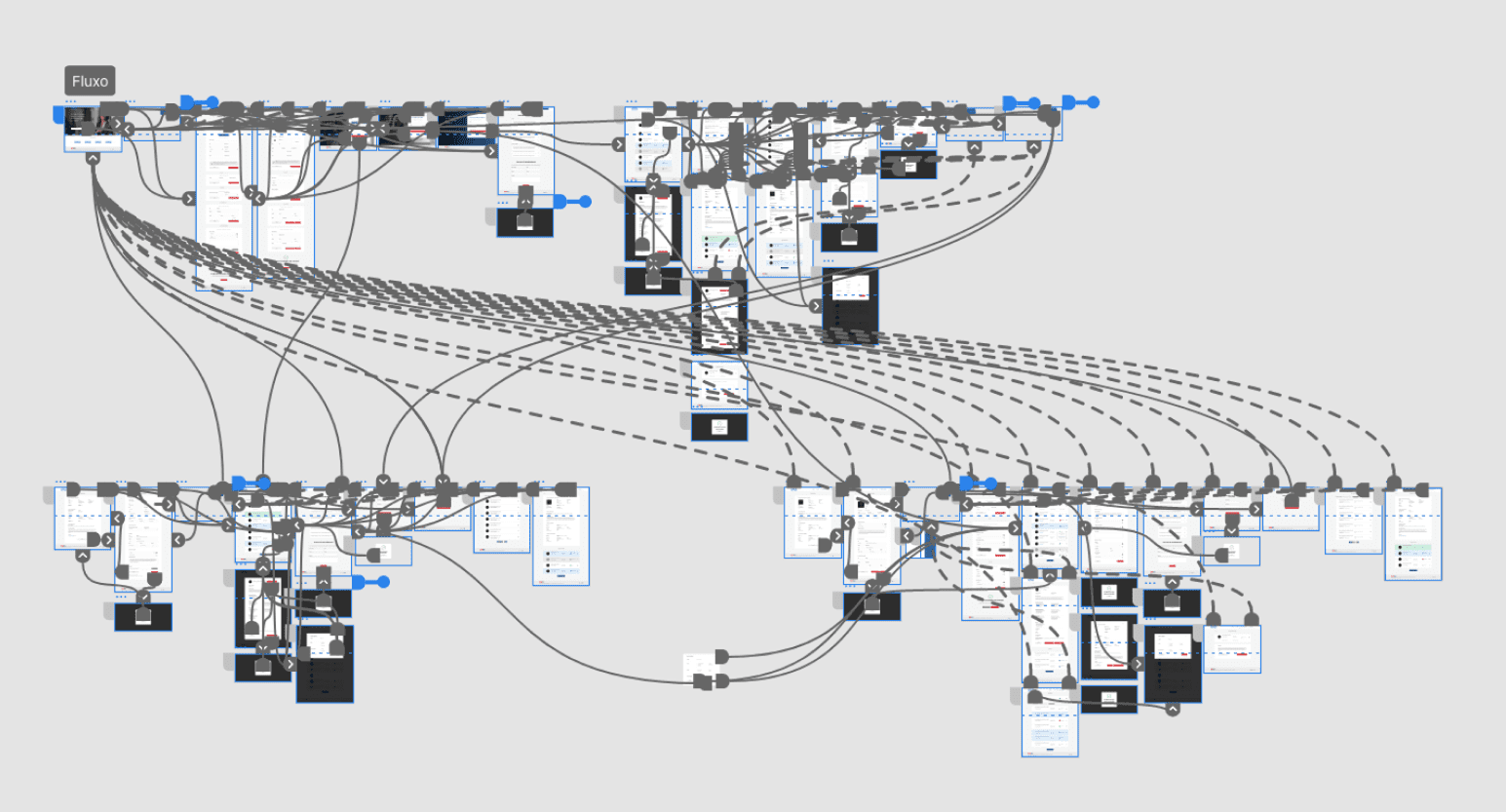
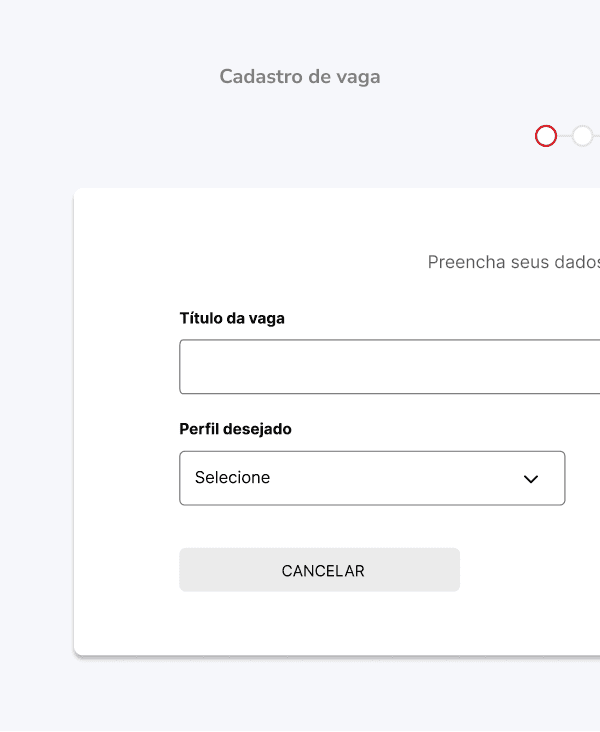
  • Mapping critical flows for job posting and applications
  • Wireframes focused on clarity and friction reduction
  • Low and mid fidelity prototyping for early validation
  • Information architecture centered on decision relevant data
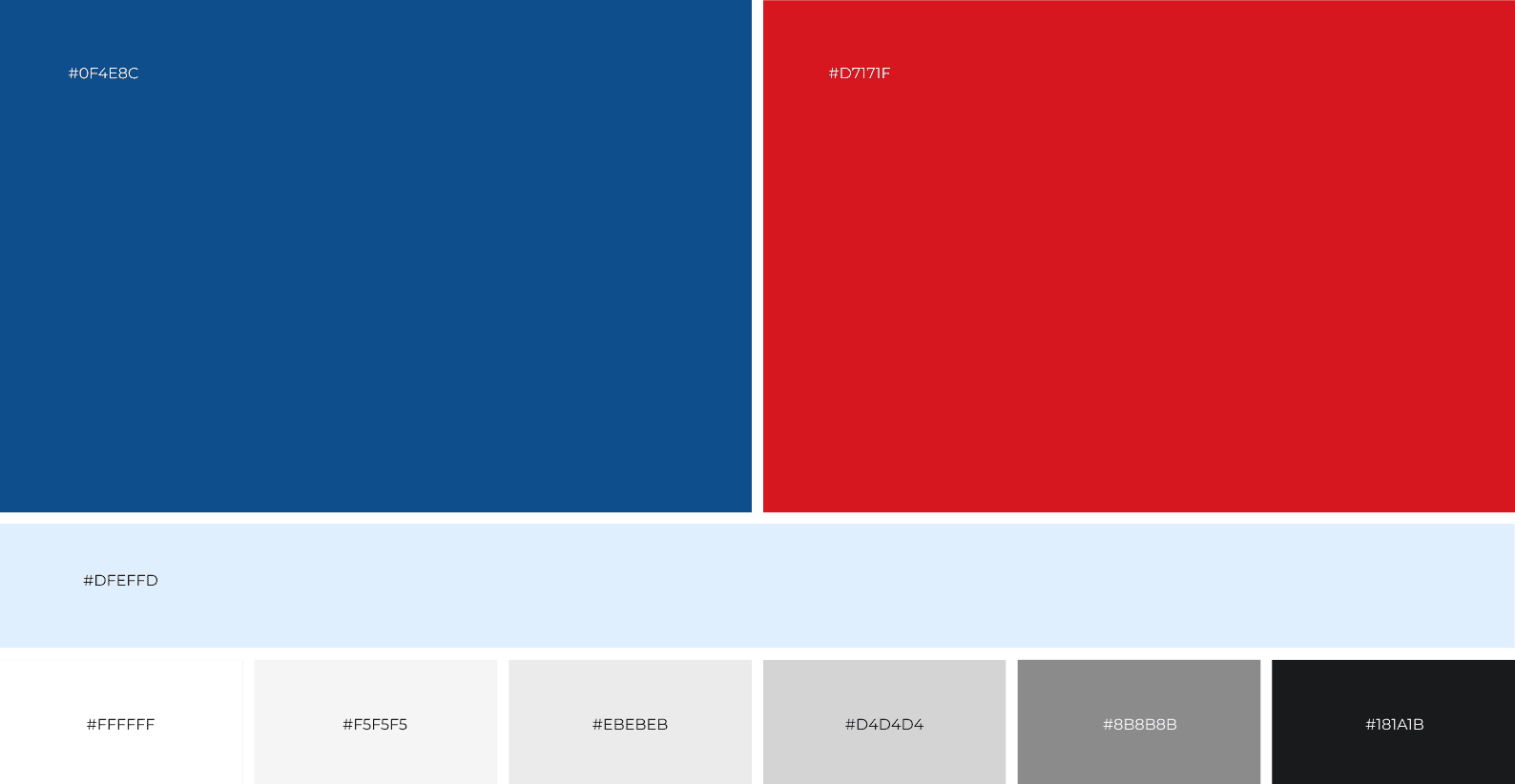
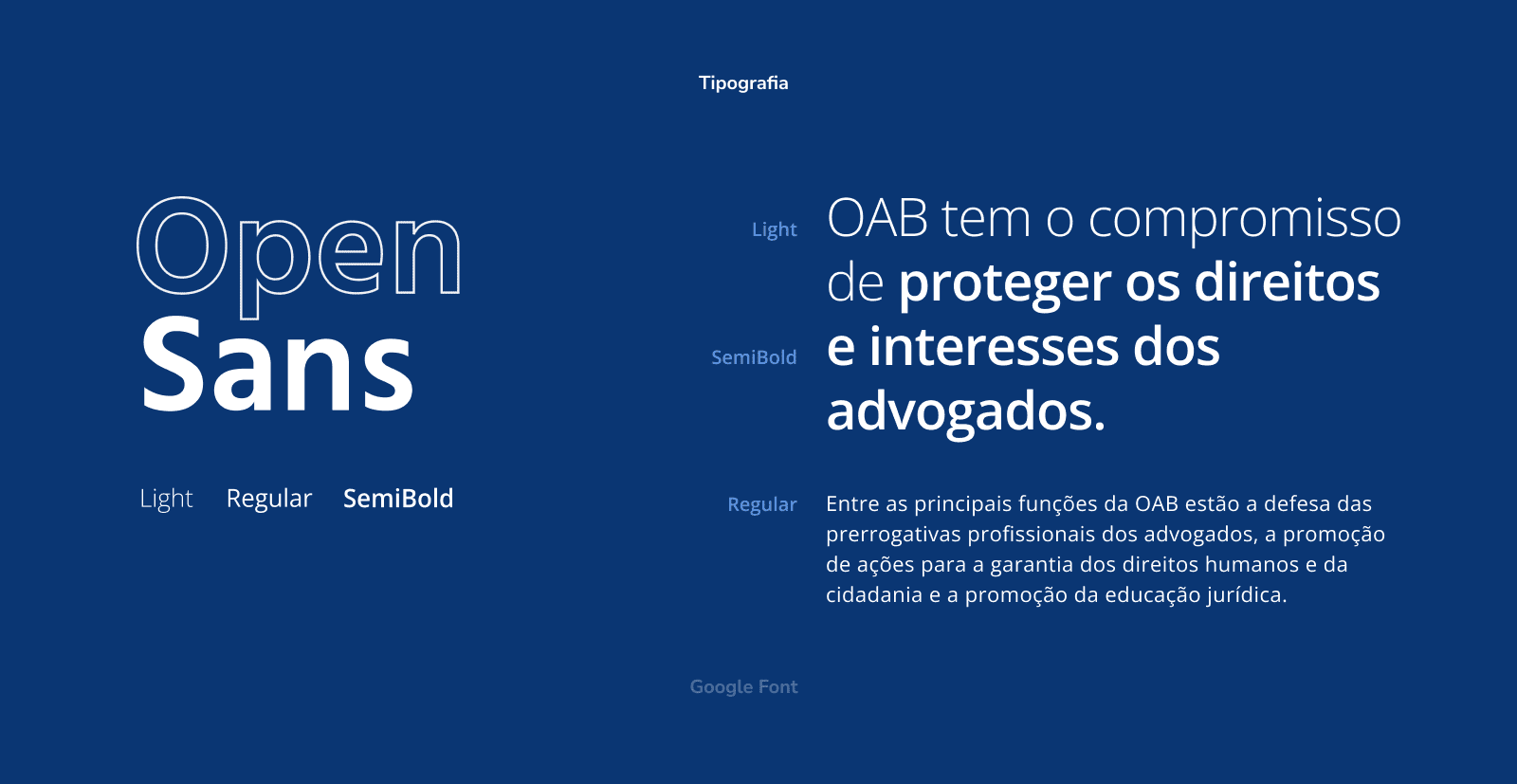
  • Style guide and component library to support consistency and scale

Decisions considered accessibility and different levels of digital maturity among users.

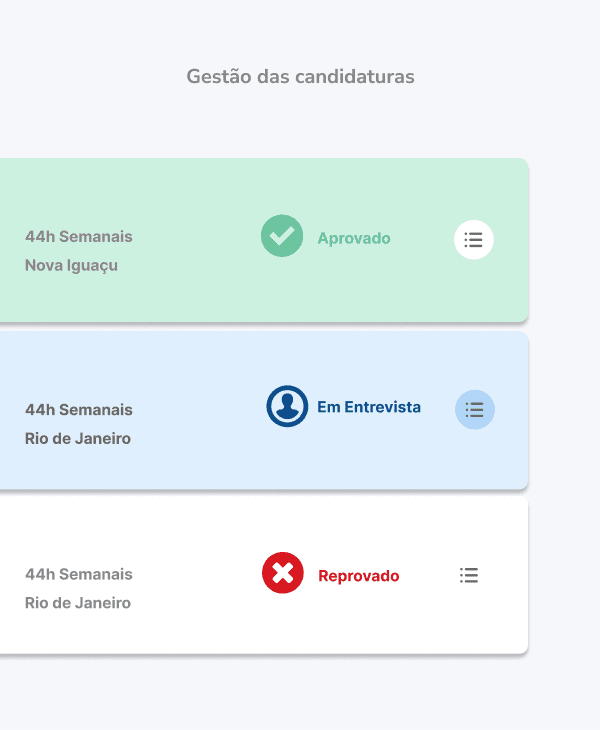
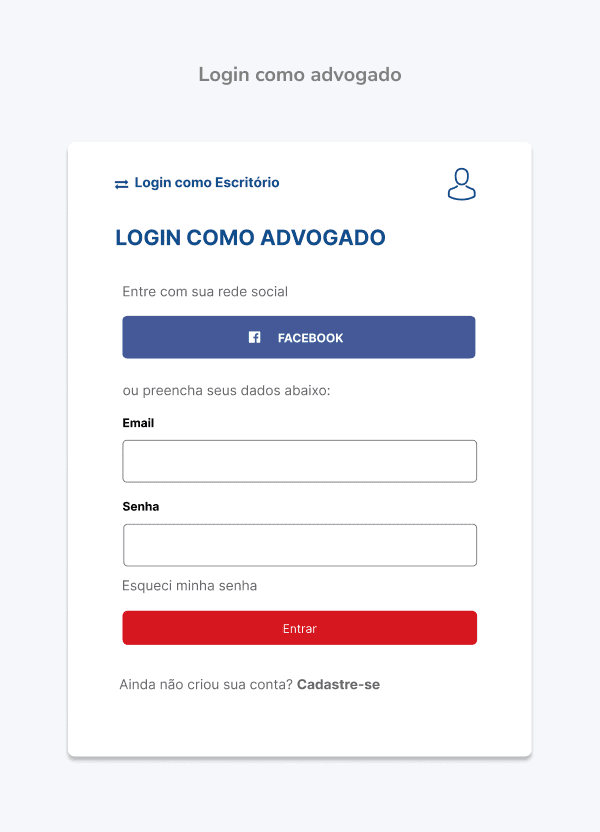
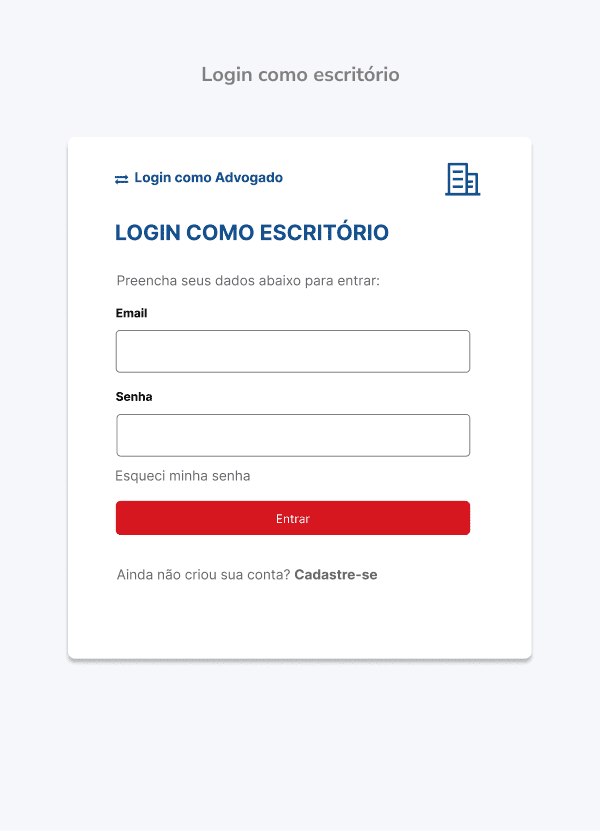
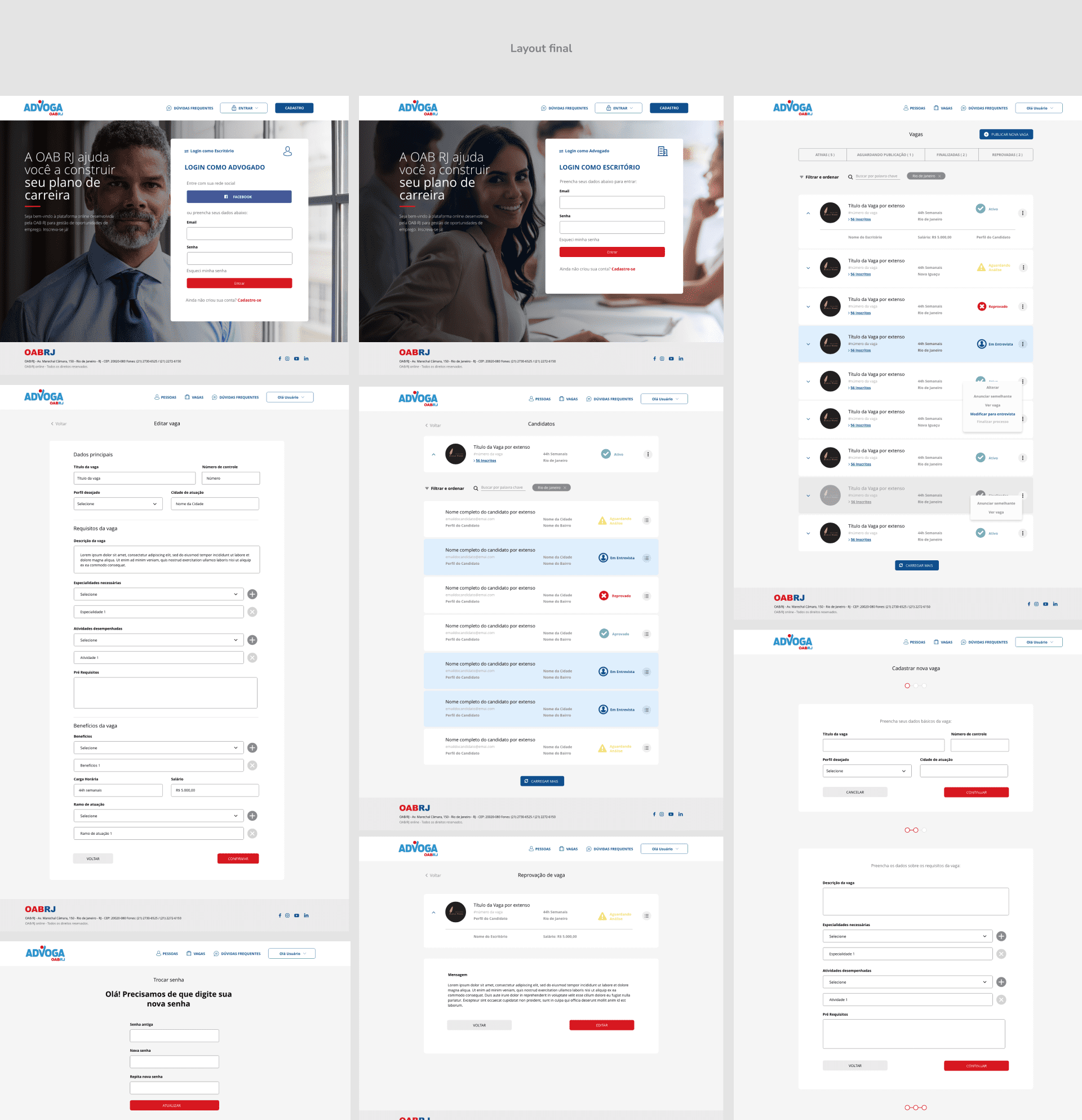
High-Fidelity Prototype

Color

Typography

User Validation

Data-Informed Iteration

Solutions were validated through:

  • Usability testing with lawyers from different regions
  • Simulated job posting and search scenarios
  • Continuous adjustments to filters, labeling, and information hierarchy

Feedback refined the interface and product language, bringing the experience closer to the reality of Brazilian legal professionals.

Strategic Reflection

Impact and Learnings

The platform began acting as a qualified mediator in a historically informal market.

Earnings

Clear and transparent presentation of legal opportunities
Better matching between professional profiles and job requirements
Reduced rework and fewer informal hiring processes
Platform adoption by law firms and lawyers across different regions

The project reinforced a core insight:

Transparency and clear criteria organize traditionally informal markets.

By structuring information and trustworthy flows, the platform generated real alignment between professionals and law firms.

This work strengthened my experience in institutional products, where experience sustains trust and public value.

Other works

I

work

on

design

solutions

tailored

to

the

context

and

goals

of

each

project.